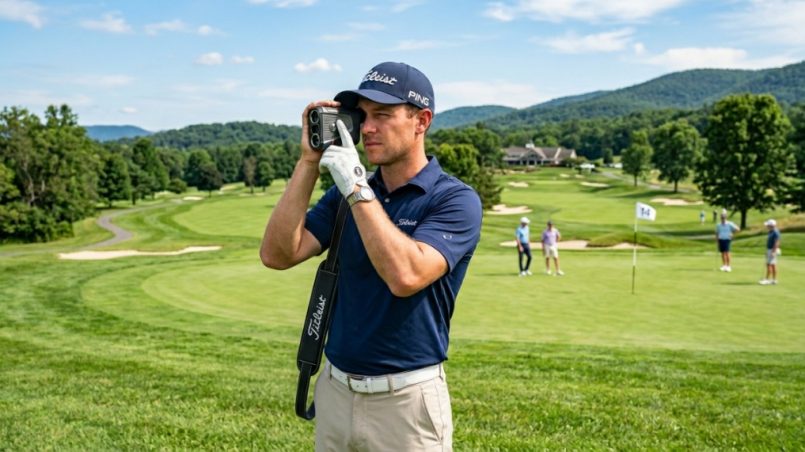
You just flushed a perfect approach shot, but as you grab your rangefinder to check the distance, the numbers dance erratically between the flag, a tree behind it, and the bunker in front. You hit your shot, but it lands short or sails long. That frustrating moment is exactly why you need a flag lock rangefinder that actually works. Flag lock technology, also known as PinSeeker or PinFinder, is designed to isolate the flagstick from the background. However, not all lock technology is created equal. Some units lock onto the first object they see, whether it is a bush or a golfer on the next tee. Choosing a reliable model means understanding how different systems process laser returns, how vibration feedback works, and which features actually matter when you are under pressure on the course.
What Exactly Is Flag Lock Technology in a Rangefinder?
Flag lock technology is a software-based filtering system that identifies and prioritizes a distant flagstick over background objects like trees, hills, or buildings. When you press the button, the laser sends out a pulse. The rangefinder processes multiple return signals and locks onto the closest, most reflective target that fits the profile of a flagstick. If the device detects a closer object or a strong background return, it uses algorithms to confirm the flag. Most modern units provide a visual ring, a vibration, or a beep to confirm the lock. Without this technology, you would constantly measure the distance to the tree line behind the green instead of the pin itself.
Why Do Some Rangefinders Fail to Lock Onto the Flag?
Several factors cause flag lock failure, including weak laser power, poor reflective coating on the flag, and insufficient scan speed. The most common reason is a lack of adequate target discrimination. Inexpensive models often use a simple “first return” system, meaning they lock onto the nearest object in the beam path. If you accidentally catch a leaf or a bunker edge, that becomes your distance. Another reason is flag stick material. Metal pins reflect laser pulses strongly, while fiberglass or composite rods can scatter the signal. Additionally, fog, rain, or strong sunlight can degrade laser performance. A reliable flag lock rangefinder uses advanced digital processing and higher laser power (typically Class 1 eye-safe but rated for longer distances) to overcome these obstacles. Look for units with a scan mode that continuously updates the reading as you pan across the green, which helps you differentiate between the flag and the background.
How Does Flag Lock Differ From PinSeeker or PinFinder Technology?
There is no technical difference between flag lock, PinSeeker, and PinFinder; these are all marketing names for the same core function. Brands like Bushnell trademarked “PinSeeker,” while Nikon uses “ID (Intelligent Design) Technology,” and Leupold calls it “P² (Pin Pro) Technology.” Every major manufacturer implements a variation of target priority logic. The key difference lies in the speed and sensitivity of the algorithm. Some brands require a more stable hand to confirm a lock, while others lock almost instantly. The most reliable systems use a combination of target distance priority, object reflectivity analysis, and motion detection to prevent false locks. When comparing models, ignore the brand names for the feature and focus on real-world reviews that discuss lock speed and accuracy at long distances (150+ yards).
What Should You Look for in a Rangefinder’s Lock Speed and Accuracy?
Lock speed should be under one second from button press to stable reading, and accuracy should be within +/- 0.5 yards at distances under 200 yards. A slow lock wastes time and increases handshakes, leading to inaccurate readings. The fastest units use multi-core processors and high-frequency laser pulses (up to 2,000 Hz). For accuracy, look for units that display distances in 0.1-yard increments rather than 1-yard increments. The 0.1-yard resolution indicates a higher-quality internal sensor. Additionally, check the maximum range for flag lock specifically. Many budget rangefinders claim a 600-yard range but only lock onto a flag up to 150 yards. A reliable flag lock system should consistently lock onto a standard 4.25-inch flagstick at 200 yards. Ask yourself: Do I play on courses with deep bunkers or trees behind the green? If yes, prioritize a model with “Jolt” or “Mute” technology that only vibrates when it has locked onto the flag, not just any object.
Can a Rangefinder With Flag Lock Also Work for Hunting?
Yes, many rangefinders with flag lock technology double as hunting rangefinders, but you must verify the scanning mode and target compensation. Golf rangefinders typically use a “first target” priority, which is exactly what hunters need for ranging animals through brush. However, hunting rangefinders often include additional features like angle compensation (true ballistic range) and higher maximum distances. A convertible model works well if you switch between sports frequently. The trade-off is that dedicated hunting units sometimes have slower lock speeds on small targets like golf pins. The best dual-purpose units offer a dedicated golf mode with flag lock and a hunting mode with brush mode. Before purchasing, check if the device has a scan mode that works in both golf and hunting environments. You can explore several affordable hybrid options that perform well in both contexts by clicking on the recommended link for top-rated models.
Which Display Features Help Confirm a Reliable Flag Lock?
The display should show a clear lock indicator, such as a red ring around the flag icon, a steady horizontal line, or a pulsing circle. Look for a high-contrast LCD or OLED display that is easy to read in bright sunlight. The best displays have adjustable brightness and a red-black color scheme for low-light conditions. Another critical feature is the vibration or “jolt” confirmation. When you feel a quick buzz, you know the device has locked onto the flag and is not reading the background. Some models combine vibration with an audible beep, which is helpful if you wear sunglasses that make the display hard to see. Avoid rangefinders that only show a lock indicator without any haptic feedback, as you will constantly second-guess whether you truly locked onto the pin. Also, check if the display shows the distance in real time during scan mode, which helps you track how the reading changes as you move the laser across the flag.
How Important Is Magnification for Flag Lock Reliability?
Magnification between 6x and 7x is ideal for golf rangefinders, as it provides a stable field of view without excessive shake. Higher magnification (8x or 9x) can make the target look closer but increases hand movement, making it harder to hold the laser spot on a small flag from 200 yards away. Lower magnification (4x or 5x) makes it harder to see the flag at long distances. A 6x magnification with a 24mm objective lens gives a good balance of image brightness and stability. Additionally, look for multi-coated optics that reduce glare and improve image clarity. Clearer optics help your eye align the laser dot more precisely with the flag, which directly improves lock reliability. If you wear glasses, ensure the eyepiece has a diopter adjustment so you can focus the reticle clearly without glasses.
When Should You Choose a Slope-Adjustable Rangefinder With Flag Lock?
Choose a slope-adjustable rangefinder if you play on hilly courses or in tournament practice rounds where you want a “plays like” distance. Slope compensation adjusts the distance based on the angle of the shot. When you aim uphill, the ball plays longer; when downhill, it plays shorter. The rangefinder calculates the adjusted yardage using trigonometry. For example, a 150-yard shot uphill at a 10-degree angle might play 160 yards. Most modern slope rangefinders still retain flag-lock technology and simply overlay the slope calculation on the locked distance. However, be aware that many local and national golf organizations prohibit slope use in competition. Look for a model with a slope on/off toggle or a legal-out indicator that shows when slope mode is disabled for tournament play. Some premium models even allow you to compensate for altitude and temperature, which further refines the flag lock reading.
What Is the Ideal Laser Class and Eye Safety for Flag Lock Rangefinders?
All consumer golf rangefinders use Class 1 eye-safe lasers, meaning the power output is too low to cause eye damage under normal use. Class 1 lasers operate at wavelengths around 905 nm (near-infrared) and have an average output of under 0.4 mW. You do not need to worry about eye safety when using these devices. However, laser class does affect performance. Higher-quality lasers within the Class 1 safety limit can still offer longer range and faster lock times. When researching, look for the FDA or CE safety certification. Avoid cheap no-name models that might use Class 3A lasers, which can be dangerous. The laser wavelength also matters for reflectivity. Most flags have a reflective coating specifically designed to work with 905 nm lasers, making lock technology more reliable. If you play in very foggy or rainy conditions, consider a rangefinder with a higher laser frequency that cuts through moisture better.
How Does Battery Life Affect Flag Lock Performance?
Battery life directly impacts lock performance because a dying battery reduces laser power and processing speed. When the battery drops below a certain voltage, the laser pulse weakens, and the unit may fail to lock onto distant flags or take longer to calculate. Most rangefinders use a single CR2 lithium battery, which should provide 3,000 to 5,000 range measurements. A good indicator of battery health is the lock speed. If your rangefinder used to lock in 0.5 seconds but now takes 1.5 seconds, replace the battery. Some high-end models include a battery level indicator on the display. For tournament play or long rounds, carry a spare battery in your bag. Rechargeable models are convenient but ensure they use a standard USB-C port for easy charging on the go. Avoid units that use odd-sized batteries that are hard to find in pro shops.
Which Materials and Build Quality Ensure Durability for Flag Lock Rangefinders?
The housing should be rubber-armored, waterproof rated to at least IPX4 (splash resistant), and shockproof from a drop of one meter. A robust build protects the internal laser and processor, which are sensitive to impact. Look for a unit with a non-slip grip that stays secure in wet conditions. The lens should have a scratch-resistant coating, as scratches can scatter the laser beam and reduce flag lock reliability. Waterproofing is critical because moisture can fog the internal lenses, blurring the target image and confusing the lock algorithm. Some high-end models are argon-purged to prevent internal fogging. When you pick up a potential model, check the seam between the body and the lens housing. Loose seams indicate poor build quality. A reliable flag lock rangefinder should feel solid and slightly heavy without being cumbersome.
Can You Trust a Budget Rangefinder for Reliable Flag Lock?
Yes, several budget rangefinders under $150 offer reliable flag lock technology, but you must verify the features carefully. Budget models often cut corners on laser power, lens quality, and processing speed. However, brands like TecTecTec, Gogogo, and Precision Pro have produced affordable units that lock consistently on flags up to 200 yards away. The key is to look for specific features: a vibration lock confirmation, a scan mode, and at least 6x magnification. Avoid the cheapest units with no brand name, as they often use inferior lasers that struggle in low light or fog. Read recent user reviews specifically mentioning flag lock performance on the courses you typically play. A budget model that works well on a flat course with large greens may fail on a tree-lined course with narrow targets. You can find a curated list of affordable models that balance cost with reliable flag lock performance in our guide on the best affordable golf and hunting rangefinders.
Frequently Asked Questions
Does flag lock work with fiberglass flagsticks?
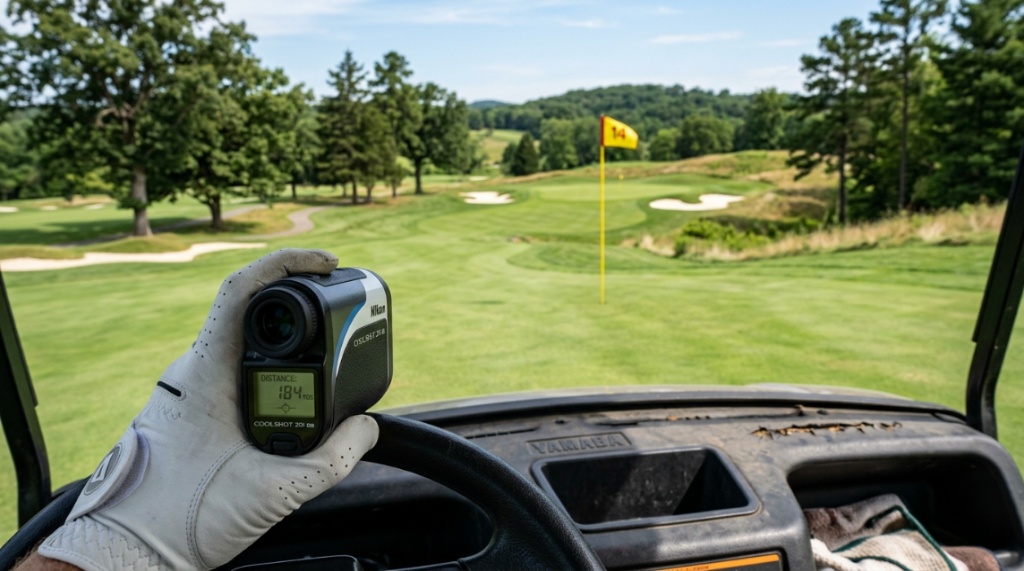
Yes, but it is less reliable than with metal pins. Fiberglass absorbs some laser energy, so the return signal is weaker. Choose a rangefinder with a high-sensitivity mode or a “pin finder” algorithm that compensates for low reflectivity. Some users report better luck when aiming at the flagstick’s base.
Can wind affect flag lock accuracy?
Wind does not directly affect the laser, but it can move the flagstick, causing you to misalign the laser spot. Use scan mode while the flag moves; the unit will lock on the flag’s average position. Alternatively, wait for a calm moment between gusts for a steady reading.
How do I know if my rangefinder has true flag lock or just first return priority?
Check the specifications for terms like “target priority,” “distance priority,” or “flag lock mode.” True flag lock systems will have a separate mode or algorithm specifically for golf. First return systems are simple and will lock onto any object, including leaves or branches.
Is it worth paying extra for a jolt or vibration confirmation?
Yes, especially if you have shaky hands or play in bright sunlight. The haptic feedback confirms the lock without requiring you to look at the display. This feature alone can save 5-10 seconds per shot, which adds up over 18 holes.
When playing in unpredictable weather, steady hands are essential for getting an accurate laser reading. Pair your steady grip with high-performance waterproof golf clothing for ultimate protection so you stay warm, dry, and focused on locking onto the pin.
Can I use a hunting rangefinder for golf with flag lock?
Yes, but only if it has a dedicated golf mode. Most hunting rangefinders use “last target” priority, which is the opposite of flag lock. Without a golf mode, you will often measure the background behind the flag. Look for a unit with switchable priority modes.
What distance should a flag lock reliably work up to?
A good rangefinder should lock onto a standard flagstick at 200 yards consistently. Excellent models will lock at 250 yards. Beyond 250 yards, the flag appears small, and the laser spot becomes larger, making precision lock difficult. For longer holes, use a landmark like a tree or bunker and pace it off.
Do I need to calibrate my FlagLock rangefinder?
Most consumer rangefinders are factory-calibrated and do not require user calibration. However, if you notice consistently wrong distances by 2-3 yards, check if the unit has a calibration mode. Some premium models like Leupold allow calibration adjustments. Otherwise, contact the manufacturer for service.
Conclusion
Choosing a rangefinder with reliable flag lock technology boils down to understanding how the device processes laser returns, what confirmation feedback it provides, and its performance in real-world conditions. Focus on lock speed, accuracy tolerance, magnification, and haptic feedback over flashy marketing claims. Remember that a flag-lock rangefinder is only as good as its laser power and algorithm, so invest in a reputable brand or a highly reviewed budget model that includes vibration confirmation and scan mode. Whether you play for fun or compete in tournaments, a reliable flag lock system will shave strokes off your game by eliminating the guesswork from every approach shot. Start your search today by reviewing the latest models that balance affordability with performance, and make your next round your most confident yet.