A school cooking club gives students an exciting way to learn practical life skills while building confidence and teamwork. Many schools now support hands on enrichment programs because they improve student engagement beyond traditional classroom lessons. Recent education research found that more than half of surveyed schools already have cooking facilities available for teaching, while many teachers without active programs expressed strong interest in starting one. Students also benefit from structured food safety education, which strengthens healthy kitchen habits and responsible cooking practices. With thoughtful planning, any school can launch a successful cooking club that inspires creativity and lifelong learning.
Why a School Cooking Club Matters
Cooking clubs help students develop skills that remain valuable throughout life. Members learn food preparation, kitchen organization, nutrition awareness, and problem solving through enjoyable activities.
Beyond cooking, students improve communication because recipes require teamwork and shared responsibilities. Club meetings also encourage creativity while introducing different cuisines and cultural traditions.
Many participants become more confident after preparing meals independently. As a result, they often become more willing to try healthier foods and new ingredients.
Define the Club’s Purpose
Every successful club begins with a clear mission. Your goals will guide activities, budgeting, and future growth.
Possible objectives include:
- Teaching basic cooking techniques
- Encouraging healthy eating habits
- Exploring world cuisines
- Supporting community service projects
- Preparing students for culinary careers
- Building teamwork and leadership
A focused mission also makes approval easier for school administrators.
Gain School Approval
Most schools require official approval before starting a new extracurricular activity. Therefore, prepare a simple proposal that explains the club’s benefits and operating plan.
Include these important details:
- Club purpose
- Meeting schedule
- Adult supervisor
- Estimated budget
- Safety procedures
- Equipment needs
- Expected number of students
Administrators appreciate organized plans because they reduce uncertainty.
Find a Faculty Advisor
Every school club needs an adult leader. Ideally, choose someone who enjoys cooking or values practical education.
Potential advisors include:
- Family and consumer science teachers
- Nutrition teachers
- Science teachers
- School counselors
- Cafeteria managers
- Interested administrators
A supportive advisor keeps meetings organized while ensuring school policies remain followed.
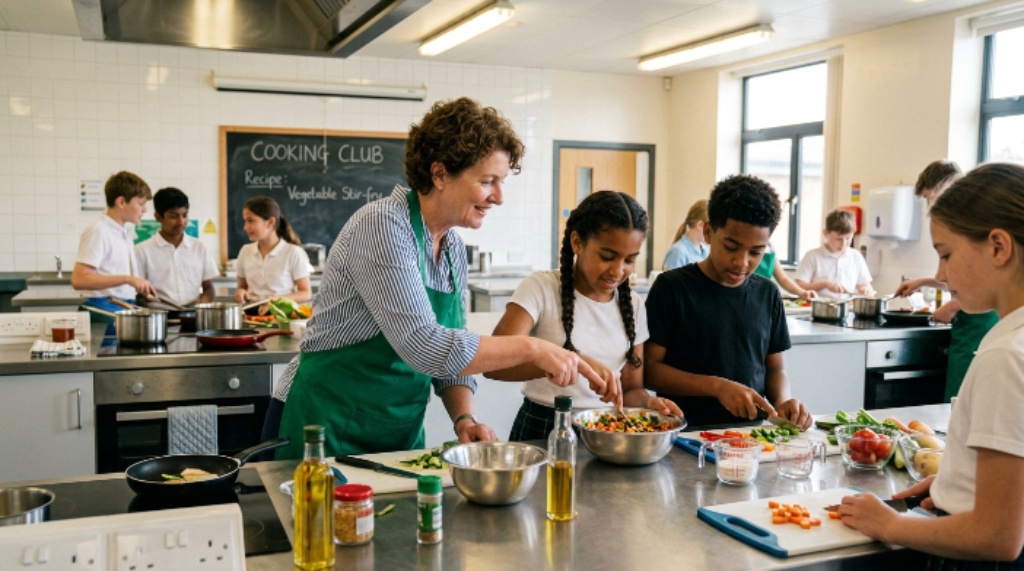
Recruit Student Members
Once approval arrives, begin inviting students to join. Promote the club through announcements, posters, newsletters, and social media pages managed by the school.
Highlight exciting experiences instead of simply mentioning cooking. Students often enjoy competitions, tasting events, and themed challenges.
Allow everyone to participate regardless of previous cooking experience. Beginners frequently become enthusiastic members after their first successful recipe.
Select a Safe Meeting Space
The meeting location affects both safety and learning quality. Choose an area that provides enough room for preparation and cleanup.
Possible locations include:
- School kitchen
- Family consumer science classroom
- Cafeteria kitchen
- Community kitchen partnership
- Culinary classroom
Before every session, inspect equipment carefully and verify that all appliances function properly.
Gather Essential Equipment
Most beginner recipes require only basic kitchen tools. Start with simple equipment before expanding your collection.
Essential supplies include:
- Mixing bowls
- Measuring cups
- Measuring spoons
- Cutting boards
- Chef knives
- Paring knives
- Baking sheets
- Saucepans
- Frying pans
- Whisks
- Spatulas
- Wooden spoons
- Oven mitts
- Food storage containers
- Cleaning supplies
Ask families or local businesses about equipment donations before purchasing everything.
Build a Realistic Budget
A cooking club does not require a large budget. Careful planning keeps expenses manageable throughout the school year.
Common costs include:
- Ingredients
- Disposable gloves
- Cleaning products
- Storage containers
- Small equipment replacements
- Special event supplies
Possible funding sources include:
- School activity funds
- Parent organizations
- Community sponsors
- Fundraising events
- Local business donations
Simple bake sales often generate enough income for several future meetings.
Develop Club Rules
Clear expectations help everyone enjoy a safe learning environment. Review the rules during the first meeting and reinforce them regularly.
Important rules include:
- Wash hands before cooking.
- Tie back long hair.
- Wear closed toe shoes.
- Follow knife safety instructions.
- Clean workstations immediately.
- Respect shared equipment.
- Report injuries quickly.
- Listen during demonstrations.
Written rules create consistency for every member.
Prioritize Food Safety
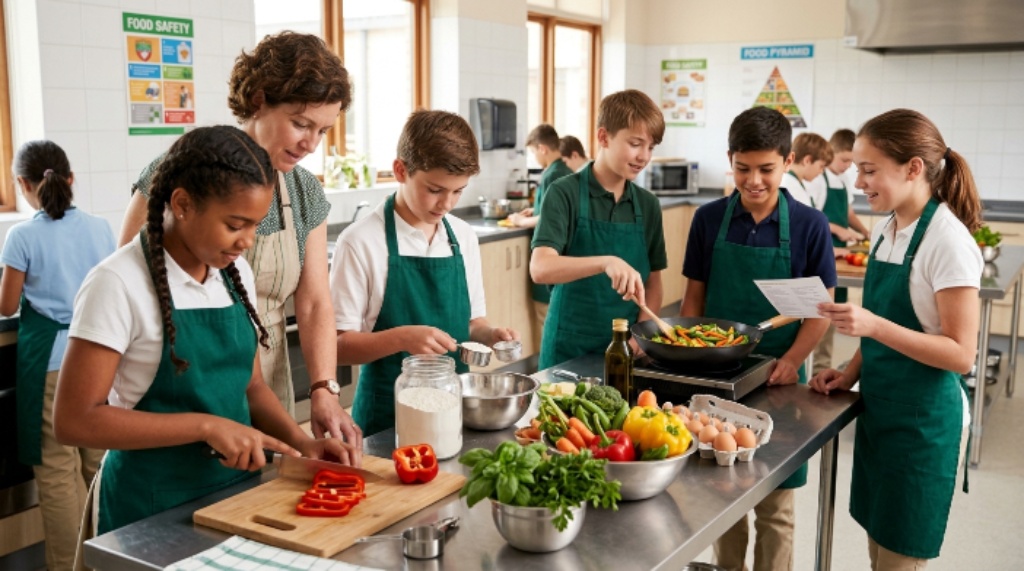
Food safety should remain the highest priority during every activity. Students must understand proper hygiene before preparing any recipe.
Personal Hygiene
Everyone should wash hands thoroughly before handling ingredients. Clean aprons and properly restrained hair also reduce contamination risks.
Safe Food Handling
Keep raw meat separate from ready to eat foods. Additionally, refrigerate perishable ingredients promptly after use.
Allergy Awareness
Collect allergy information before the first meeting. Always review ingredient labels carefully before beginning each recipe.
Equipment Safety
Demonstrate proper knife handling before students begin cutting ingredients. Supervise ovens and hot surfaces throughout every session.
Plan Engaging Weekly Activities
Interesting activities keep students returning each week. Alternate between demonstrations, cooking practice, and fun challenges.
Popular meeting ideas include:
- Breakfast recipes
- Healthy snacks
- Homemade pasta
- International cuisine nights
- Holiday baking
- Smoothie workshops
- Sandwich competitions
- Vegetable tasting events
- No bake desserts
- Meal planning sessions
Variety keeps every meeting fresh and educational.
Create Monthly Themes
Monthly themes help organize lesson planning throughout the school year.
Possible themes include:
Healthy Eating Month
Students prepare balanced meals while learning basic nutrition principles.
Around the World Month
Members explore recipes from different cultures while discussing food traditions.
Baking Basics Month
Students practice measuring, mixing, and baking techniques through simple desserts.
Budget Cooking Month
Members learn how affordable ingredients create delicious family meals.
Seasonal Produce Month
Recipes highlight fruits and vegetables that are widely available during each season.
Teach Practical Kitchen Skills
Cooking clubs should emphasize useful techniques instead of complicated recipes. Students benefit more from mastering fundamentals.
Teach skills such as:
- Knife techniques
- Measuring accurately
- Reading recipes
- Mixing ingredients
- Cooking temperatures
- Kitchen organization
- Meal planning
- Food storage
- Cleanup routines
These abilities transfer easily into everyday life.
Encourage Student Leadership
Student leaders strengthen the club while reducing the advisor’s workload. Leadership also develops responsibility and communication skills.
Possible leadership roles include:
- Club president
- Vice president
- Secretary
- Treasurer
- Equipment manager
- Safety leader
- Recipe coordinator
- Photographer
Rotate responsibilities so everyone gains valuable experience.
Invite Guest Speakers
Guest presenters add excitement while introducing new perspectives.
Consider inviting:
- Local chefs
- Restaurant owners
- Dietitians
- Farmers
- Bakers
- Culinary instructors
- Food entrepreneurs
Students often feel inspired after hearing real career experiences.
Connect Cooking with Other Subjects
Cooking naturally supports classroom learning. Therefore, integrate educational concepts whenever possible.
Examples include:
- Mathematics through measuring
- Science through food chemistry
- Geography through global recipes
- History through traditional dishes
- Language arts through recipe writing
Cross curricular activities increase educational value.
Organize Friendly Competitions
Competitions motivate students while encouraging teamwork.
Popular ideas include:
- Mystery ingredient challenge
- Cupcake decorating contest
- Healthy lunch competition
- Sandwich creation contest
- Team cooking relay
- Recipe improvement challenge
Focus on creativity and learning rather than perfection.
Give Back Through Community Service
Cooking clubs can positively impact the community. Service projects teach generosity alongside practical skills.
Ideas include:
- Preparing snacks for school events
- Organizing healthy food demonstrations
- Supporting local food drives
- Creating recipe booklets
- Hosting family cooking nights
Community involvement strengthens the club’s reputation.
Celebrate Student Success
Recognition encourages continued participation. Celebrate achievements throughout the school year instead of waiting until the final meeting.
Celebrate through:
- Certificates
- Cooking badges
- Recipe showcases
- Club newsletters
- School announcements
- End of year celebrations
Students appreciate seeing their progress recognized.
Evaluate and Improve the Club
Ask members for feedback regularly. Their suggestions help improve future meetings and activities.
Review questions such as:
- Which recipes were most enjoyable?
- What skills improved?
- Which activities should return?
- What equipment is needed?
- Which future themes sound exciting?
Continuous improvement keeps the club engaging every year.
Common Challenges and Solutions
Every new club faces obstacles. Fortunately, most challenges have practical solutions.
| Challenge | Solution |
| Limited budget | Hold fundraisers and seek donations |
| Small kitchen | Divide members into rotating groups |
| Limited time | Select quick recipes |
| Equipment shortages | Share stations and rotate tasks |
| Low attendance | Plan exciting themed events |
| Ingredient allergies | Offer safe substitutions |
Planning ahead prevents many common problems.
Conclusion
Starting a cooking club at school creates lasting benefits that extend well beyond the kitchen. Students gain confidence, teamwork, creativity, and practical life skills while enjoying meaningful experiences with friends. Careful planning, strong safety practices, and engaging activities build a successful program that grows every year. Begin with a simple plan, recruit enthusiastic members, and take the first step toward creating a cooking club that students will remember long after graduation.
FAQs
How many students should join a school cooking club?
A group of 10 to 20 students works well for supervision and hands on participation.
Do schools need a full kitchen to start a cooking club?
No, many clubs begin with portable equipment and simple recipes.
How often should the club meet?
Most successful clubs meet once each week or twice each month.
What age is best for a school cooking club?
Students from upper elementary through high school can participate with proper supervision.
How can a cooking club raise money?
Bake sales, community events, sponsorships, and school fundraisers are effective funding options.