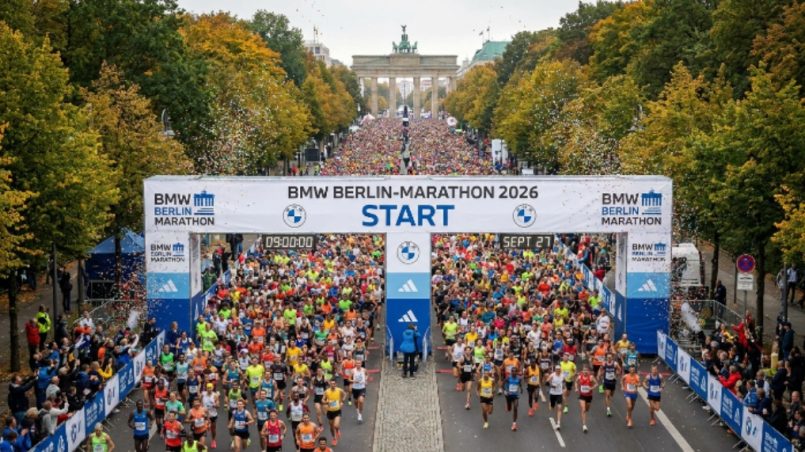
Some races are just races. Then there is Berlin. Every year, tens of thousands of runners from across the world gather in the German capital for one of the most celebrated marathons on the planet. In 2026, the event returns on Sunday, September 27, and all signs point to a truly historic edition. Whether you are chasing a personal best, completing a World Marathon Major, or running for a cause that matters to you, this guide covers everything you need to know.
Race Date, Start Times and Event Weekend
The 2026 race takes place on Sunday, September 27, 2026, in Berlin, Germany. The wheelchair and handbike race starts at 8:50 a.m. Central European Summer Time. The main running field, including elite and open waves, starts at 9:15 a.m. CEST.
However, race day is just one part of a full four-day weekend. The Marathon Expo opens on Thursday, September 24, at Messe Berlin in Charlottenburg and runs through Saturday, September 26. Every runner must collect their bib in person at the Expo before race day. Bib collection on race day is not available under any circumstances, so planning your arrival carefully is essential.
On Saturday, September 26, the Generali 5K gives runners a chance to experience the final five kilometers of the marathon course in a more relaxed setting. The inline skating race also takes place on Saturday, following the same iconic route as the marathon. Additionally, the weekend includes closing parties for both skaters and runners on Saturday and Sunday evenings, giving the entire event a festival atmosphere that goes well beyond the race itself.
The Course: Fast, Flat and Unforgettable
The Berlin Marathon route starts on the Straße des 17. Juni and winds through ten of the city’s neighborhoods before finishing right at the Brandenburg Gate. The course runs entirely on asphalt, which is easier on the legs than concrete, and stays almost completely flat from start to finish. This combination of surface and profile makes it the fastest marathon course in the world.
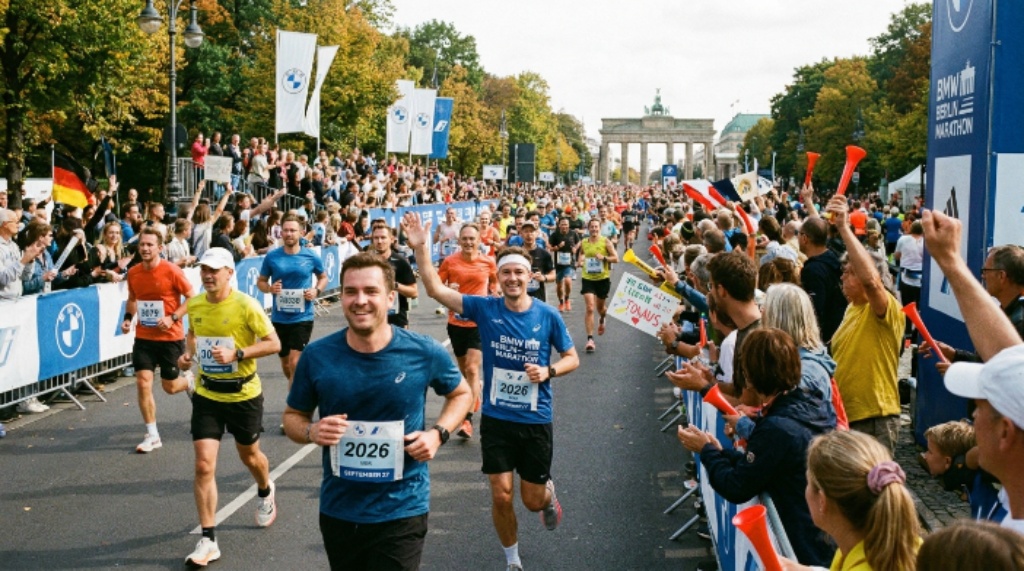
Along the way, runners pass some of Berlin’s most iconic landmarks. The Victory Column, the Reichstag, the Berlin Cathedral, the Berlin Wall, Potsdamer Platz, and Checkpoint Charlie all appear at various points on the route. Crowds line the streets throughout, and live bands and entertainment fill the air with energy for the full 42.195 kilometers.
The stretch between kilometers 30 and 38, along the Ku’damm, is where many runners find the race truly tests them. The long, wide boulevard offers few distractions, and the legs begin to feel the distance. Experienced runners recommend arriving at that section still feeling controlled rather than already pushing hard. The reward for patience comes at kilometer 41, when the Brandenburg Gate comes into view. That sight alone has carried thousands of runners through their final kilometers on legs that had little left to give.
The time limit for the course is 6 hours and 15 minutes, measured from the moment each runner crosses the starting line. Walkers are permitted as long as they stay within this limit.
Registration: How to Get a Bib
The 2026 lottery closed in November 2025. If you did not enter the lottery, there are still three ways to secure a place.
The first route is through charity. Several official charity partners, including Realbuzz, the RTL Foundation, and Children e.V., offer guaranteed bibs in exchange for a fundraising commitment. Fundraising targets typically range from around 1,500 to 3,000 euros depending on the organization. Charity places fill up quickly, so contacting a partner directly and early gives you the best chance of success.
The second route is through official tour operators. SCC EVENTS, the organizer, works with authorized travel companies across more than 50 countries. These operators offer guaranteed race entries bundled with accommodation and logistical support. This route tends to cost more overall, but it removes the stress of planning a race trip independently.
The third route, for runners who qualify by time, is to apply through the qualifying time pool. This pool has significantly better acceptance odds than the general lottery. Qualifying times vary by age group and change from year to year, so checking the official website for current thresholds is important.
Participants must be at least 18 years old on race day. Each runner must collect their bib in person at the Expo and cannot delegate this to anyone else. Starting in 2026, all finishers receive a warming, reusable poncho at the finish line as a sustainability-focused alternative to the traditional foil blanket. Runners who prefer a clothing bag can book one for five euros during registration, though the poncho will not be available if that option is selected.
Additionally, each race entry for 2026 includes a four-day public transport ticket for Fare Zone ABC, valid from September 24 to 27. This covers travel across Berlin’s metro, bus, and tram networks for the entire race weekend, making it easy to move around the city without worrying about fares.
Elite Field: World Record Holder Returns
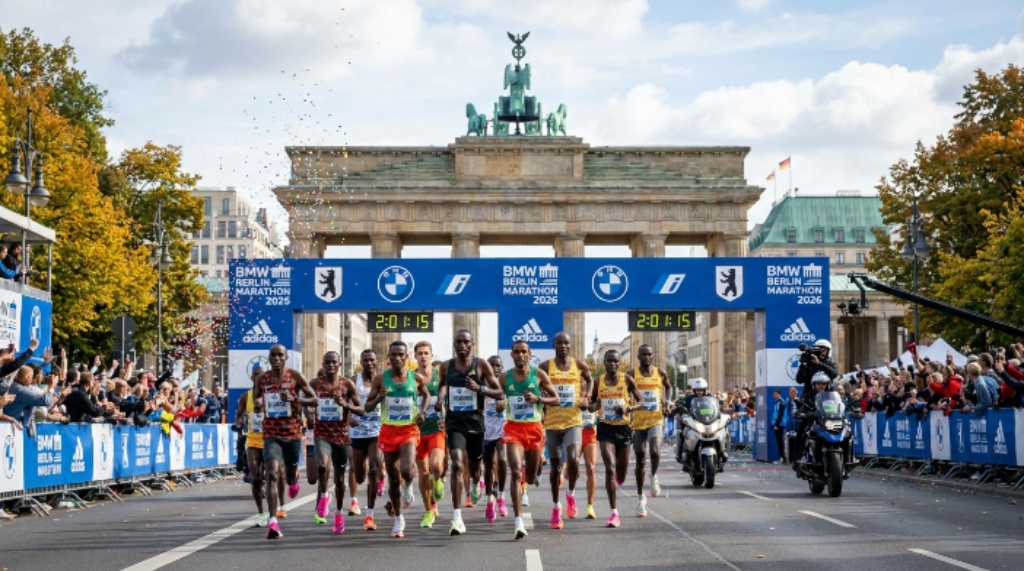
One of the most exciting storylines heading into September is the confirmed return of marathon world record holder Sabastian Sawe. The Kenyan won the 2025 BMW Berlin-Marathon with a time of 2:02:16, setting what commentators described as a warm-weather world record given the extreme heat conditions that day.
Since then, Sawe achieved something that had never been done before in official marathon competition. He ran 1:59:30 at the 2026 London Marathon, becoming the first person in history to complete the official 42.195-kilometer distance in under two hours in a sanctioned race. His decision to return to Berlin for 2026 has generated enormous excitement. Race Director Mark Milde noted that if conditions align on race day, anything is possible.
Around 60,000 athletes from approximately 160 countries are expected to participate in 2026, including runners, wheelchair competitors, handbikers, and inline skaters. The race holds World Athletics Elite Platinum Label status and forms part of the six-race Abbott World Marathon Majors series alongside Boston, London, Tokyo, Chicago, and New York.
Weather and What to Expect in Late September
Berlin in late September offers near-ideal marathon conditions. Morning temperatures typically sit between 8 and 12 degrees Celsius, with dry air and low humidity. Average race-day temperatures across past editions have ranged from about 10 to 18 degrees Celsius, which is close to the scientific optimum for marathon performance.
However, Berlin’s weather can surprise you. A rain layer or light jacket for the start corral is always worth packing. Temperatures can feel colder than expected at 9 a.m. after standing in an open start area for 30 to 45 minutes. Bring disposable layers you are comfortable leaving behind at the start.
Sustainability at the 2026 Race
The 2026 edition marks a significant step forward in how the event approaches sustainability. BRITA joins as a new multi-year co-sponsor and hydration partner, introducing refill stations along the course and free filtered water at the Expo. The goal is to reduce the number of single-use cups handed out during the race. This partnership reflects a wider shift in how large sporting events manage their environmental impact, and it makes Berlin one of the more forward-thinking marathons in this regard.
The reusable poncho for all finishers is another visible sustainability initiative this year, replacing the traditional single-use foil blanket that has been a staple at marathons for decades.
Practical Race Day Tips
Planning ahead makes a big difference at an event of this scale. The following tips reflect what experienced Berlin runners consistently recommend.
- Collect your bib at the Expo on Thursday or Friday. Saturday gets very busy, and fatigue from walking the Expo the day before a race is real.
- Book accommodation in Mitte, Tiergarten, or Charlottenburg. These neighborhoods put you within walking distance of both the start and finish areas.
- Use the included public transport ticket to move around the city during race weekend. It covers all metro, bus, and tram lines across Zones A, B, and C.
- Bring your own pre-race fuel from home or buy it the day before at a supermarket. German race-day breakfasts tend to be heavier than most runners prefer before 42 kilometers.
- Arrive at the start area at least 60 to 90 minutes before your wave. The start zone is large and bag drop queues take time.
- Run the first 10 kilometers a few seconds per kilometer slower than your goal pace. The flat, fast course rewards patience heavily, and going out too hard on the wide early streets is one of the most common Berlin mistakes.
Conclusion
The 2026 BMW Berlin-Marathon on September 27 is shaping up to be one of the most memorable editions in the race’s 52-year history. The full race weekend runs from September 24 to 27, anchored by the Marathon Expo at Messe Berlin and the main race on Sunday morning with a 9:15 a.m. start. The flat, iconic course through ten Berlin neighborhoods finishes beneath the Brandenburg Gate and remains the fastest marathon route in the world. The 2026 lottery has closed, but charity entries and official tour operator packages still offer guaranteed places. World record holder Sabastian Sawe returns to lead an elite field of around 60,000 athletes from 160 countries. New sustainability initiatives from BRITA and the introduction of a reusable finisher poncho reflect a commitment to environmental responsibility. Whether you are chasing a world record, a personal best, or simply the experience of running through one of the great cities of Europe, Berlin on September 27 is the place to be.
Frequently Asked Questions
When exactly does the 2026 race start?
The race takes place on Sunday, September 27, 2026. Wheelchair and handbike athletes start at 8:50 a.m. CEST. The main running field, including elite and open waves, starts at 9:15 a.m. CEST. Runners must be in their start corrals well before these times.
The lottery is closed. Can I still get a bib for 2026?
Yes. Three routes remain open. You can secure a guaranteed place through an official charity partner in exchange for a fundraising commitment, through an authorized international tour operator who bundles race entry with accommodation, or through the qualifying time pool if your previous marathon time meets the current threshold. Check the official website at bmw-berlin-marathon.com for current partner lists and qualifying standards.
What is the time limit for finishing the race?
The course stays open for 6 hours and 15 minutes, measured from each runner’s individual crossing of the starting line. Walkers are welcome to participate as long as they stay within this limit. Handbikes and racing wheelchairs are the only authorized sports equipment on the course.
What does each runner receive at the finish line in 2026?
Every finisher receives a medal and a warming, reusable poncho at the finish line. The poncho replaces the traditional single-use foil blanket as part of the event’s new sustainability approach. Runners who prefer a clothing bag can book one for five euros during registration, but in that case the poncho will not be available.
What is the best neighborhood to stay in for race weekend?
Mitte, Tiergarten, and Charlottenburg are the most practical choices. All three neighborhoods sit close to the start area on the Straße des 17. Juni and within walking distance of the Brandenburg Gate finish line. Staying nearby means you can walk to the start, avoid traffic, and return to your hotel on foot after finishing. Book early, as hotels in these areas fill up months in advance of race weekend.