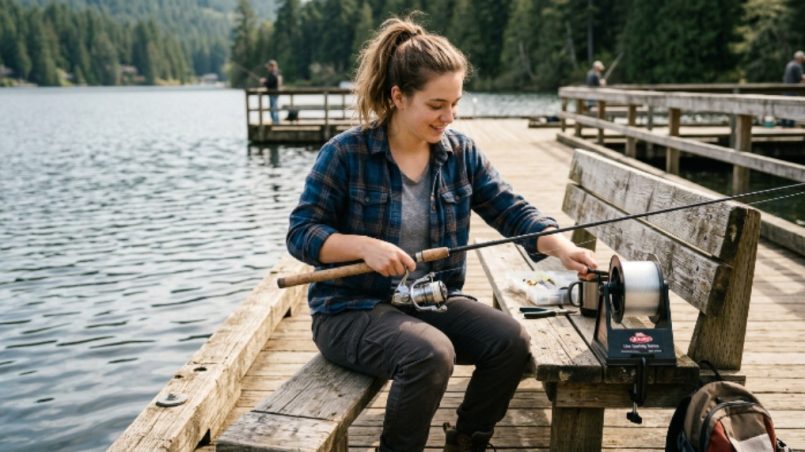
Few things ruin a fishing trip faster than tangled, twisted line. You cast out, reel in, and suddenly your line bunches into a mess that seems impossible to fix. The frustrating part is that most line twist problems start before you even reach the water. They begin the moment you spool your reel incorrectly. Fortunately, a simple tool and the right technique can prevent this entirely. This beginner guide will show you exactly what to do.
What Is a Fishing Line Spooler and Why Do You Need One
A fishing line spooler is a small, handheld or table-mounted device that holds your line spool steady while you wind line onto your reel. It sounds simple, and it is. However, the difference it makes is enormous.
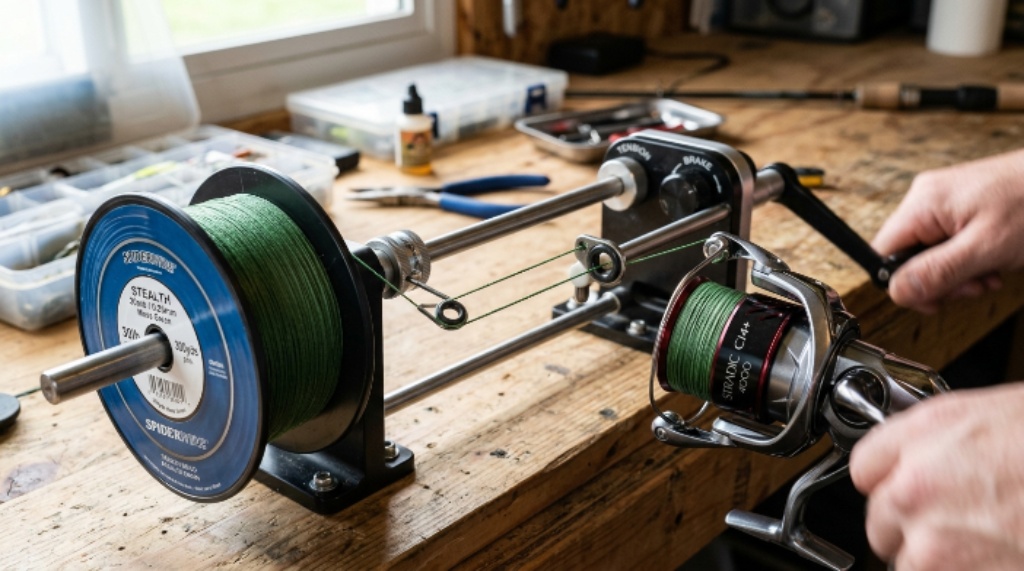
Without a spooler, most beginners hold the line spool loosely in their hand or lay it flat on the floor. Both methods allow the spool to spin freely in ways that introduce twist into the line before it even reaches the reel. A spooler holds the spool on a fixed axis and controls tension, so the line transfers cleanly and evenly.
Additionally, spoolers are inexpensive. You can find a solid one for under fifteen dollars. For the amount of frustration they prevent, they are one of the smartest purchases any beginner can make.
Understanding Line Twist and Why It Happens
Line twist occurs when your fishing line develops small rotational coils along its length. These coils do not straighten out on their own. Over time, they tangle, reduce casting distance, and weaken the line at stress points.
There are several common causes. The most frequent one is spooling line from a spool that is spinning in the wrong direction. When the line comes off the supply spool in one direction and wraps onto the reel in another, every wrap adds a small twist. After two hundred yards of line, those small twists add up to a serious problem.
Another common cause is reeling in against a closed drag. When a fish runs and you reel anyway, the line twists on itself rapidly. However, the root cause for most beginners is simply poor spooling technique from the start. Getting the initial setup right eliminates most twist problems entirely.
Choosing the Right Spooler for Your Reel
Before you learn how to spool fishing line properly, you need the right spooler for your setup. Not all spoolers work with all reel types. Here is a simple breakdown.
For spinning reels, look for a spooler with an adjustable tension knob. Spinning reels are the most common type for beginners, and they are also the most prone to line twist if spooled carelessly. A tension-controlled spooler keeps the line tight and aligned during transfer.
For baitcasting reels, a more robust spooler with a sturdy mounting base works best. Baitcasters require even line lay across the spool width, so look for a spooler that lets you guide the line side to side as you wind.
Portable handheld spoolers work well for casual anglers who fish from a single rod. Table-mounted spoolers suit anglers with multiple rods to set up at once. Either way, choose a spooler with a smooth, friction-controlled spindle. Rough spindles create uneven tension, which leads right back to twisted, uneven line.
How to Set Up Your Spooler Correctly
Setting up your spooler takes less than five minutes. Do this carefully the first time and the rest of the process becomes easy.
Start by threading the spindle through the center hole of your line spool. Most supply spools have a standard center hole that fits universal spooler spindles. Tighten the tension adjustment until the spool resists spinning freely but still rotates smoothly when you pull the line.
Next, position the spooler so the line spool faces the same direction as your reel. This alignment is critical. The line should come off the supply spool and travel in the same rotational direction that your reel takes it up. Misalignment here is one of the top causes of twist beginners miss entirely.
If you are using a table-mounted spooler, clamp it securely to a stable surface. Lay your rod along the table with the reel facing the spooler. Keep the distance between the spooler and the reel tip at about two to three feet. This gap allows enough room for the line to travel without vibrating or looping.
Step-by-Step Guide to Spooling Your Reel Without Twist
Now you are ready to begin. Follow these steps in order and you will avoid line twist from the very first cast.
Step one — thread the line through your rod guides. Start at the tip and work down toward the reel. Make sure the line passes through every guide. Skipping a guide causes uneven pressure during casting.
Step two — tie the line to the reel arbor. Use an arbor knot for this. Loop the line around the arbor, tie an overhand knot around the standing line, and then tie another overhand knot at the tag end. Pull tight and trim the excess.
Step three — close the bail if you are using a spinning reel. The bail must be closed before you start winding or the line will spool onto the body of the reel instead of the spool.
Step four — begin reeling slowly. Apply light thumb pressure to the line just above the reel as you wind. This adds controlled tension and ensures tight, even wraps. Do not rush this step.
Step five — fill the spool to about one eighth of an inch from the rim. Overfilling causes line to spill off during casts. Underfilling reduces casting distance. That small gap from the rim is the sweet spot.
Step six — check for twist as you go. Every thirty or forty turns, let several feet of line hang loose from the rod tip. If it hangs straight, you are doing well. If it coils and spirals, stop and adjust the direction your supply spool faces before continuing.
Common Mistakes Beginners Make When Spooling
Even with a spooler in hand, a few habits can still cause problems. Knowing them in advance saves you a lot of time on the water.
The first mistake is skipping the tension adjustment. Loose tension allows line to layer unevenly. Tight tension can stretch monofilament and reduce its breaking strength. Find the middle — firm resistance without strain.
The second mistake is ignoring line memory. Fluorocarbon and monofilament lines develop memory from sitting on a supply spool. Therefore, soak the supply spool in warm water for about thirty minutes before spooling. This relaxes the line and makes it lay flatter on your reel.
The third mistake is filling the reel too quickly. Speed is the enemy of even line lay. Reel slowly, guide the line with your fingers, and let the spooler do its job.
Maintaining Your Line After Spooling
Good spooling technique gets you started, but maintenance keeps your line performing well all season. After every few fishing trips, run your line through a folded damp cloth while reeling slowly. This cleans dirt from the line and helps you feel for rough spots or weak points.
Additionally, if you notice your line developing small coils during a session, do not ignore them. Let out about fifty yards of line behind a slow-moving boat or let it trail in mild current for a minute or two. This natural tension removes light twist before it becomes a bigger problem.
Replace monofilament line at least once a season. Fluorocarbon lasts a bit longer, but inspect it regularly. A spooler tool guide is only as effective as the line you put on your reel. Old, degraded line twists more easily and breaks under far less stress.
Conclusion
Line twist is one of the most common and most preventable problems in fishing. The solution starts with understanding how twist forms, choosing the right spooler, and following a careful step-by-step process. When you know how to spool fishing line correctly, your casts become longer, your line lasts longer, and your time on the water becomes far more enjoyable. A fishing line spooler is a small investment with a big return. Whether you fish once a month or every weekend, this simple tool and the techniques in this guide will keep your setup clean, smooth, and ready for any catch.
Frequently Asked Questions
Do I really need a spooler, or can I spool line by hand?
You can spool by hand, but it is much harder to avoid line twist without a spooler. A spooler controls the tension and rotational direction of the supply spool, which are the two main factors that cause twist. For beginners especially, a spooler is strongly recommended.
How do I know if my line has too much twist already?
Hold your rod horizontally and let about a foot of line hang freely from the tip with nothing attached. If the line hangs straight, it is fine. If it coils or spirals, you have twist. You can remove light twist by trailing the line in moving water. Heavy twist usually means it is time to respool.
What type of fishing line is easiest to spool without twist?
Braided line is the easiest to spool because it has virtually no memory. Monofilament is the most prone to twist and memory. Fluorocarbon falls in between. Regardless of line type, always use a tension-controlled spooler for the best results.
How full should I fill my spinning reel spool?
Fill your spinning reel spool to about one eighth of an inch from the rim. This is enough line for long casts without the risk of line spilling over the edge. Overfilling is one of the most common causes of tangles and wind knots during casting.
Can I use the same spooler for both spinning and baitcasting reels?
Many universal spoolers work with both reel types. However, check that the spindle diameter fits your supply spool and that the tension adjustment range suits your line weight. Some table-mounted spoolers come with adapters that accommodate both styles, making them a versatile choice for anglers with multiple reel setups.
Related Topics:
How to Find the Best Budget Fishing Rod and Reel Combo for Beginners
How to Prevent Fogging in Fishing Sunglasses During Humid Days