Nothing disrupts a perfect fishing day quite like sunglasses that constantly fog up. Whether you’re casting your line at dawn or battling a big catch in the afternoon heat, foggy lenses can ruin your visibility and diminish your fishing experience. Understanding why fogging happens and how to prevent it will help you stay focused on what matters most: landing that trophy fish.
Humid conditions create the perfect environment for fog formation on your eyewear. The combination of warm air, body heat, and moisture creates condensation that clouds your vision at the worst possible moments. Fortunately, several practical solutions can keep your vision clear throughout even the most humid fishing trips.
This comprehensive guide explores proven methods for preventing fog buildup on fishing sunglasses. From choosing the right eyewear to implementing simple maintenance techniques, you’ll discover everything needed to maintain crystal-clear vision on the water.
Understanding Why Fishing Sunglasses Fog Up
Fog forms when warm, moist air contacts a cooler surface. Your sunglasses become that cooler surface, especially when you’re moving between different temperature zones or when your body heat rises during physical activity.
During humid days, the air already contains significant moisture. When this moisture-laden air meets your lenses, which are cooler than the surrounding air, water vapor condenses into tiny droplets. These droplets scatter light and create the cloudy appearance that blocks your view.
Several factors make fishing particularly prone to fogging issues. The proximity to water naturally increases humidity levels around you. Additionally, physical activities like casting, reeling, and moving around the boat generate body heat. This heat rises toward your face, carrying moisture that settles on your lenses.
Temperature differences amplify the problem. Moving from an air-conditioned boat cabin to the hot deck creates instant fogging. Similarly, early morning fishing when the air is cool but your body is warm produces the same frustrating result.
Selecting Eyewear with Proper Airflow Design
The design of your sunglasses plays a crucial role in preventing fog accumulation. Ventilation sunglasses feature strategic openings that allow air to circulate around the lenses, reducing moisture buildup and maintaining clear vision.
Look for frames that incorporate small vents along the top or sides. These openings create airflow channels that help dissipate moisture before it condenses on the lenses. The vents should be positioned to allow air movement without letting in excessive light or water spray.
Frame shape matters significantly. Sunglasses that sit too close to your face trap heat and moisture. Choose styles with a slight gap between the frame and your face, allowing natural air circulation. However, the gap shouldn’t be so large that it lets in glare from the sides.
Wraparound designs offer both protection and ventilation benefits. While they shield your eyes from peripheral light and wind, quality wraparound sunglasses include ventilation features that prevent the enclosed space from becoming a fog chamber. The key is finding designs that balance coverage with breathability.
Consider the nose piece design as well. A raised nose bridge creates space for air to flow upward and away from the lenses. Adjustable nose pieces let you customize the fit, ensuring optimal ventilation while maintaining comfort during long hours on the water.
Choosing Lenses with Anti-Fog Properties
Modern lens technology has revolutionized fog prevention. Fog-resistant lenses incorporate special coatings that minimize water droplet formation, keeping your vision clear even in challenging conditions.
These specialized coatings work by altering the surface tension of the lens. Instead of forming individual droplets that scatter light, moisture spreads into a thin, uniform layer that remains transparent. This hydrophilic coating attracts water molecules and spreads them evenly across the surface.
The quality of anti-fog treatments varies considerably. Permanent coatings embedded into the lens material during manufacturing provide long-lasting protection. These treatments withstand cleaning and normal wear better than surface-applied coatings.
When shopping for fishing sunglasses, ask specifically about the durability of the anti-fog coating. Some treatments last for years, while others degrade after a few months of regular use. Reading reviews from other anglers can provide insight into real-world performance.
Additionally, consider lenses designed specifically for water sports. These often combine anti-fog properties with polarization and water-repellent coatings. The combination creates a comprehensive solution for maintaining clear vision in marine environments.
Applying Anti-Fog Solutions and Treatments
Even without fog-resistant lenses, you can apply various treatments to prevent fogging. These solutions provide temporary or semi-permanent protection that significantly improves performance in humid conditions.
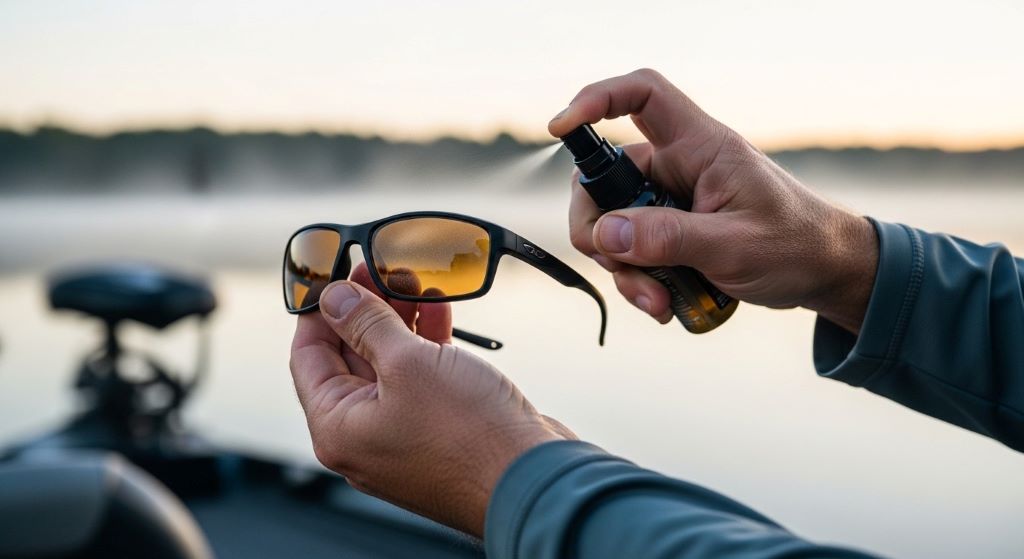
Anti-fog sprays create a thin barrier on your lenses that prevents moisture condensation. Apply these products according to manufacturer instructions, typically involving spraying both sides of clean lenses and allowing them to air dry. Most sprays provide protection for several days before requiring reapplication.
Anti-fog wipes offer convenient on-the-go protection. These pre-moistened cloths contain the same active ingredients as sprays but in a portable format. Keep a few in your tackle box for quick application when you notice fogging starting to occur.
Gel formulations provide longer-lasting protection than sprays or wipes. Apply a small amount to each lens, spread it evenly with your finger, and buff with a clean cloth. Quality gels can prevent fogging for weeks, making them ideal for serious anglers who fish frequently.
Some anglers swear by household alternatives like dish soap or shaving cream. While these can work in a pinch, they weren’t designed for optical surfaces and may leave residue or damage special lens coatings. Therefore, stick with products specifically formulated for eyewear when possible.
Proper Cleaning and Maintenance Techniques
Maintaining clean lenses is essential for fog prevention. Dirt, oils, and residue create nucleation points where moisture can gather and form droplets. Regular cleaning keeps your lenses performing at their best.
Start each fishing trip with clean sunglasses. Wash them with lukewarm water and a mild soap designed for eyewear. Avoid hot water, which can damage lens coatings. Rinse thoroughly to remove all soap residue, as any remaining film can contribute to fogging.
Use a microfiber cloth for drying and general cleaning. These soft cloths won’t scratch lenses and effectively remove oils and smudges. Avoid paper towels, which can be abrasive, or your shirt, which often contains dirt particles that scratch lenses.
Never touch the inside of your lenses with your fingers. Skin oils create a film that attracts moisture and promotes fogging. If you must adjust your sunglasses, hold them by the frames rather than touching the lenses.
Store your sunglasses in a protective case when not in use. This prevents dust accumulation and protects them from scratches. A clean case with ventilation holes allows any moisture to evaporate rather than staying trapped against the lenses.
Managing Body Heat and Moisture
Your body generates significant heat and moisture during fishing activities. Managing this output helps reduce the amount of moisture reaching your sunglasses.
Wearing moisture-wicking headwear helps absorb sweat before it reaches your face. A quality fishing hat or headband captures perspiration and allows it to evaporate away from your eyewear. Choose materials designed for athletic activities that dry quickly and breathe well.
Take breaks to cool down during intense fishing sessions. When you feel yourself getting hot, step into shade or splash cool water on your wrists and neck. Lowering your body temperature reduces the amount of warm, moist air rising toward your face.
Consider your clothing choices carefully. Light-colored, breathable fabrics reflect heat and allow air circulation. Avoid dark colors that absorb heat and heavy materials that trap moisture against your skin.
Stay hydrated throughout the day. Proper hydration helps regulate body temperature more effectively. However, remember that drinking cold beverages can sometimes cause temporary fogging when you first put your sunglasses back on after removing them to drink.
Adjusting to Environmental Conditions
Different fishing scenarios require different fog prevention strategies. Adapting your approach based on conditions maximizes your vision quality throughout the day.
During early morning fishing, temperature differences are most extreme. Allow your sunglasses to acclimate to outdoor temperature before putting them on. Keep them outside your tackle box or vehicle for a few minutes so they match the ambient temperature.
On particularly humid days, apply anti-fog treatment more frequently than usual. The extra moisture in the air overwhelms protection faster, so reapply sprays or wipes every few hours rather than once per day.
When moving between air-conditioned spaces and outdoor heat, remove your sunglasses before entering the cooler area. This prevents instant fogging when you step back outside. Alternatively, keep them on but allow them to adjust gradually by stepping in and out slowly.
Rain creates unique challenges. Water droplets on lenses can trigger fogging when combined with body heat. Use a water-repellent coating in addition to anti-fog treatment. This combination causes water to bead and roll off rather than spreading across the surface.
Utilizing Quick-Fix Solutions on the Water
Even with the best prevention methods, occasional fogging can still occur. Knowing quick remedies keeps you fishing rather than constantly cleaning your glasses.
Shaking your sunglasses generates airflow that helps dry minor fogging. Hold them by the temples and give them a few quick shakes. The air movement evaporates light condensation almost immediately.
Holding your sunglasses away from your face for a few seconds allows air circulation to clear fog naturally. This works particularly well for minor fogging that hasn’t completely obscured your vision.
Keep a dry microfiber cloth easily accessible in a waterproof container. When fogging occurs, a quick wipe restores clarity. Make sure the cloth stays dry, as a damp cloth will make the problem worse.
Some anglers carry a small portable fan in their boat. Directing airflow across your face and sunglasses for a few moments can clear persistent fogging and provide cooling relief during hot conditions.
Selecting the Right Sunglasses for Your Fishing Style
Different fishing environments and techniques benefit from specific sunglass features. Matching your eyewear to your fishing style improves both comfort and fog prevention.
Offshore anglers face constant wind and spray. For these conditions, choose wraparound styles with excellent ventilation and water-repellent coatings. The wind provides natural ventilation, but the spray requires lenses that shed water quickly.
Freshwater bass fishing often involves moving between shaded areas and bright sun. This temperature variation increases fogging risk. Prioritize fog-resistant lenses and adjustable frames that maintain airflow in various positions.
Fly fishing requires precise vision for tying knots and spotting fish. Fogging becomes particularly frustrating in this discipline. Look for lightweight frames that don’t trap heat and lenses with durable anti-fog coatings that won’t interfere with the clarity needed for detailed work.
Surf fishing combines humidity, temperature changes, and physical exertion. This demanding environment requires sunglasses with multiple fog-prevention features working together. Don’t compromise on quality, as the challenging conditions will exploit any weakness in your eyewear.
Caring for Your Investment
Quality fishing sunglasses represent a significant investment. Proper care extends their lifespan and maintains their fog-prevention capabilities.
Never leave sunglasses in hot vehicles. Extreme heat can damage lens coatings and warp frame materials. Store them in a protective case in a cooler part of your vehicle or take them with you.
Rinse your sunglasses with fresh water after every saltwater fishing trip. Salt crystals damage coatings and create rough surfaces where moisture can accumulate. A quick rinse removes salt before it can cause harm.
Replace damaged or worn lenses promptly. Scratched lenses not only impair vision but also create surfaces where moisture can collect and form fog more easily. Many manufacturers offer replacement lenses for their frames.
Check frames regularly for loose screws or damaged hinges. A proper fit is essential for maintaining the ventilation gap that prevents fogging. Tighten loose components and replace damaged parts to keep your sunglasses performing optimally.
Exploring Advanced Technologies
Innovation continues to improve fog prevention in fishing eyewear. Understanding emerging technologies helps you make informed decisions about future purchases.
Battery-powered anti-fog systems use gentle heating elements to warm lenses slightly, preventing condensation. While more common in diving masks, this technology is appearing in high-end fishing sunglasses designed for extreme conditions.
Photochromic lenses that adjust to light conditions are now being combined with advanced anti-fog coatings. This combination addresses two major challenges facing anglers in a single lens, though it comes at a premium price point.
Nanotechnology coatings create microscopically smooth surfaces that resist both fogging and water spots. These advanced treatments outperform traditional coatings but require careful handling to maintain their effectiveness.
Smart sunglasses with built-in heads-up displays face unique fogging challenges. Manufacturers are developing specialized solutions for these products that may eventually benefit traditional fishing sunglasses.
Conclusion
Preventing fogging in fishing sunglasses during humid days requires a multi-faceted approach. Selecting eyewear with proper ventilation sunglasses design and fog-resistant lenses provides the foundation for clear vision. However, combining quality equipment with proper maintenance techniques and environmental awareness yields the best results.
Remember that no single solution works perfectly in all conditions. The most successful anglers use multiple strategies together, adapting their approach based on weather, activity level, and fishing environment. Applying anti-fog treatments, managing body heat, and keeping lenses clean all contribute to fog-free fishing.
Investing in quality sunglasses designed specifically for fishing pays dividends through improved comfort and performance. When you can see clearly throughout the day, you spot more fish, make better casts, and enjoy the experience more fully.
By implementing the techniques discussed in this guide, you’ll spend less time dealing with foggy lenses and more time doing what you love. Clear vision on the water isn’t just about convenience; it’s about safety, success, and maximizing every moment of your fishing adventures.
Frequently Asked Questions
Why do my fishing sunglasses fog up more in the morning than during the afternoon?
Morning air is typically cooler and often more humid due to overnight dew formation. When your warm body heat meets these cool, moist conditions, fogging occurs more readily. Additionally, your sunglasses start at a cooler temperature overnight. As the day progresses and everything warms up, temperature differences decrease and fogging becomes less frequent.
Can I use car windshield anti-fog products on my fishing sunglasses?
While automotive anti-fog products might technically work, they’re not recommended for eyewear. These products are formulated for glass windshields and may damage specialized lens coatings found on fishing sunglasses. They can also leave residue that affects optical clarity. Always use products specifically designed for eyewear to protect your investment.
How often should I reapply anti-fog spray during a full day of fishing?
Most anti-fog sprays provide protection for four to six hours under normal conditions. However, humid environments, heavy sweating, or frequent lens cleaning can reduce effectiveness. Plan to reapply every three to four hours during demanding conditions. Keep a small bottle in your tackle box for convenient reapplication throughout the day.
Do polarized lenses affect fogging more than regular lenses?
Polarization itself doesn’t increase fogging tendency. However, polarized fishing sunglasses often feature multiple lens coatings, and lower-quality coatings can sometimes be more prone to fogging. High-quality polarized lenses with proper anti-fog treatment perform just as well as non-polarized options. The frame design and ventilation matter more than lens polarization for fog prevention.
Will using anti-fog treatments damage the polarization or other coatings on my lenses?
Quality anti-fog products designed for eyewear shouldn’t damage lens coatings when used as directed. However, always check the product label to ensure compatibility with coated lenses. Avoid harsh chemicals, alcohol-based cleaners, or abrasive materials that can strip protective layers. When in doubt, contact your sunglass manufacturer for recommended products.
Related Topics:
Why Fish Keep Throwing Treble Hooks (And How to Stop It for Good)
Essential Equipment and Gear for Sports Fishing Newbies