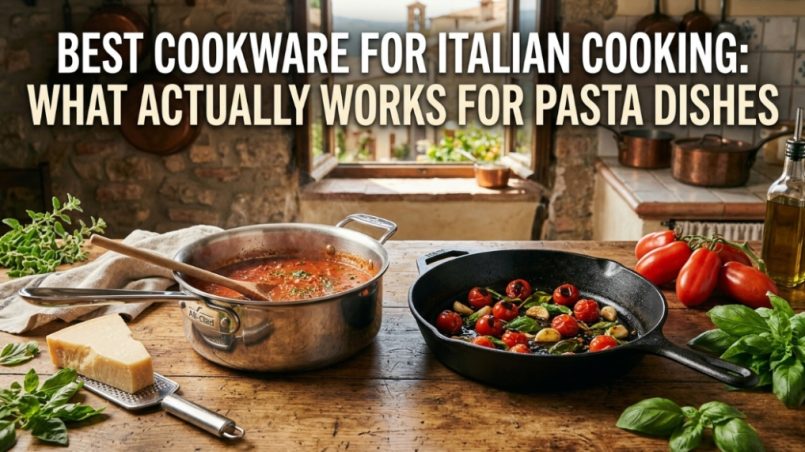
In many Italian homes, the sound that matters most in the kitchen is not a timer—it is the moment pasta water returns to a rolling boil after the noodles are added. That single detail reveals why choosing the right Italian cookware matters more than most recipes admit. The best cookware for pasta dishes is a large, heavy-bottomed stockpot paired with quality sauté pans or skillets that allow sauces and pasta to finish cooking together. Using the proper pasta cookware improves heat distribution, prevents sticking, preserves texture, and helps sauces cling to every strand.
What Is the Best Cookware for Italian Cooking and Pasta Dishes?
Direct answer: The best cookware for Italian cooking combines a large stockpot, a stainless steel sauté pan, and cookware materials that deliver even heat and durability. Stainless steel with an aluminum or copper core remains the preferred choice for most pasta dishes.
Italian cuisine relies heavily on technique rather than complicated equipment. Yet cookware still plays a major role. A poorly designed pot can cause uneven boiling, while a thin pan may scorch delicate tomato sauces.
Traditional Italian kitchens often favor cookware that can handle:
- Large volumes of boiling water
- Slow simmering tomato sauces
- High-heat sautéing
- Finishing pasta directly in sauce
- Long-term daily use
For home cooks researching quality pasta pots, this detailed review of a dedicated pasta pot design demonstrates how specialized cookware can simplify draining and cooking larger batches.
Unlike general-purpose cookware, true Italian cooking equipment prioritizes heat control, capacity, and versatility across multiple cooking stages.
Why Does Cookware Matter So Much for Pasta?
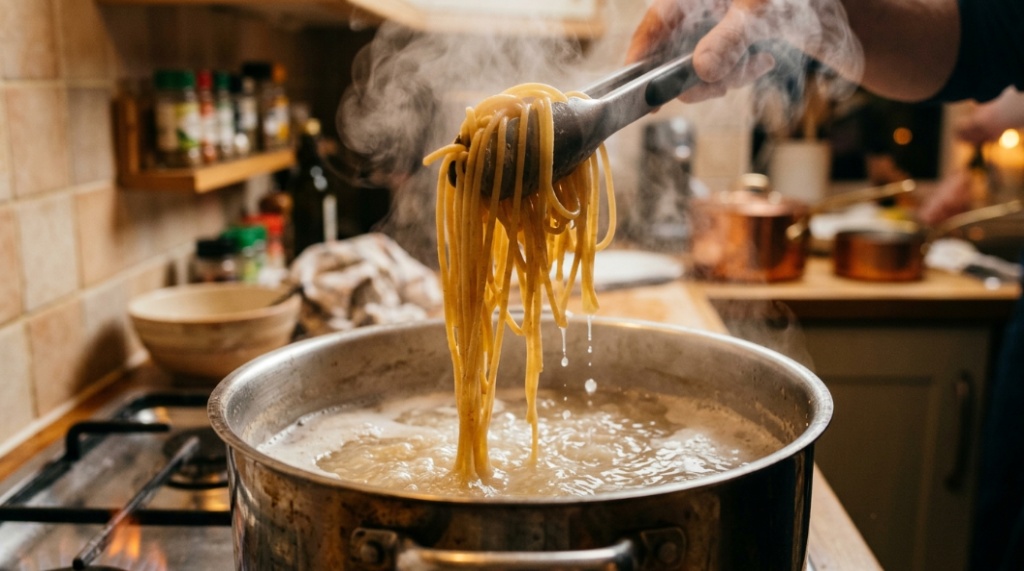
Direct answer: Cookware affects boiling efficiency, sauce consistency, heat retention, and the final texture of pasta.
Many people assume pasta quality depends only on ingredients. In reality, cookware directly influences cooking results.
Consider what happens during pasta preparation:
- Water temperature must remain stable after pasta is added.
- Starches released from pasta need room to circulate.
- Sauces require gentle reduction without burning.
- Pasta often finishes cooking inside the sauce.
A large pot prevents overcrowding. A heavy sauté pan creates stable heat for emulsifying pasta water with sauce. Together they help achieve the creamy texture found in authentic Roman dishes like cacio e pepe and carbonara.
Professional chefs frequently recommend finishing pasta in sauce because starch molecules bind with fats and liquids, creating a cohesive texture impossible to achieve by simply pouring sauce on top.
Which Cookware Materials Work Best for Italian Cooking?
Direct answer: Stainless steel offers the best balance of performance, durability, and versatility, while copper, aluminum, cast iron, and ceramic each serve specialized purposes.
Material selection significantly affects cooking performance.
| Material | Advantages | Best Italian Uses | Drawbacks |
|---|---|---|---|
| Stainless Steel Clad | Durable, even heating, non-reactive | Pasta, sauces, everyday cooking | Higher initial cost |
| Copper | Exceptional temperature control | Delicate sauces | Expensive, requires maintenance |
| Aluminum | Fast heating, lightweight | Boiling water, quick cooking | Can react with acidic foods |
| Cast Iron | Excellent heat retention | Baked pasta dishes | Heavy weight |
| Ceramic | Gentle cooking surface | Slow-cooked sauces | Can chip over time |
Is Stainless Steel the Best Choice?
Yes. Stainless steel cookware with an aluminum or copper core remains the most practical choice for most households.
It handles acidic ingredients such as tomatoes, wine, and lemon without reacting chemically. It also tolerates high temperatures and frequent use.
When Is Copper Worth Considering?
Copper excels when precision matters. Professional chefs often use copper pans for sauces because temperature adjustments happen almost instantly.
However, the higher cost makes it less practical for many home kitchens.
What Type of Pot Is Best for Cooking Pasta?
Direct answer: A tall stockpot between 6 and 12 quarts is ideal for most pasta recipes because it allows water circulation and consistent boiling.
The most common pasta mistake is using a pot that is too small.
Benefits of a larger pasta pot include:
- Reduced sticking
- More consistent cooking
- Faster return to boiling temperature
- Improved starch distribution
- Easier stirring
For families of four, an 8-quart stockpot typically provides the ideal balance between capacity and convenience.
Many Italian cooks prefer pots with:
- Heavy encapsulated bases
- Tight-fitting lids
- Comfortable handles
- Stainless steel interiors
Do You Need a Dedicated Pasta Pot?
Not necessarily. A quality stockpot works perfectly well for most cooks.
However, specialized pasta pots with integrated strainers can improve convenience when preparing large quantities.
What Pans Are Essential for Authentic Pasta Sauces?
Direct answer: A stainless steel sauté pan with high sides is the most important pan for finishing pasta and developing flavor-rich sauces.
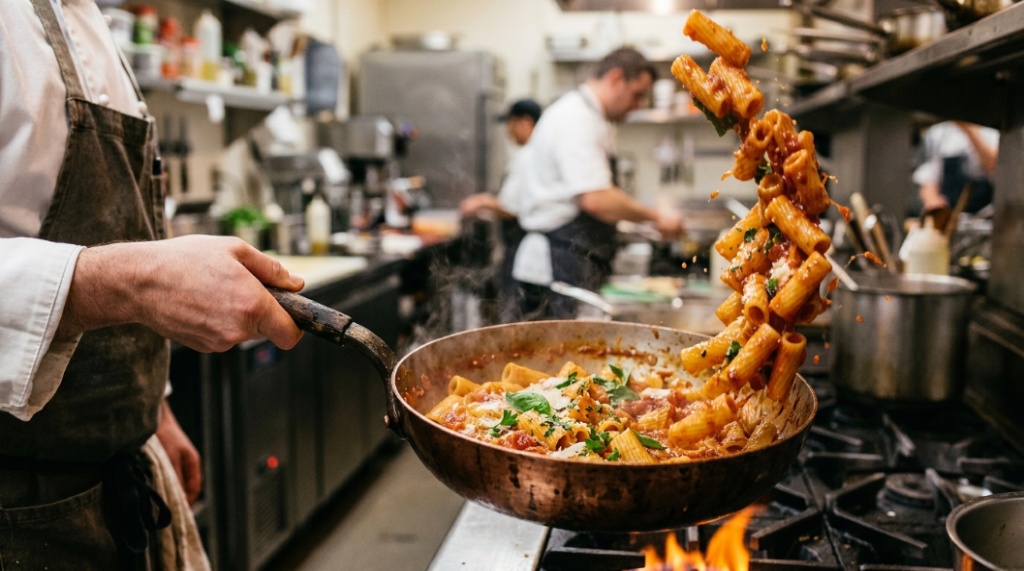
Many Italian recipes require transferring partially cooked pasta directly into sauce.
A quality sauté pan provides:
- Wide cooking surface
- Controlled evaporation
- Efficient emulsification
- Room for tossing pasta
Traditional Italian dishes often rely on this technique.
Examples include:
- Spaghetti aglio e olio
- Carbonara
- Amatriciana
- Puttanesca
- Cacio e pepe
If you enjoy making fresh pasta at home, learning how to prevent dough from sticking during pasta preparation can improve results before the cooking process even begins.
What Cookware Do Italians Traditionally Use?
Direct answer: Traditional Italian kitchens use practical cookware built for daily cooking, including stockpots, sauté pans, terracotta vessels, and heavy-bottomed saucepans.
Italian home cooking values function over trends.
Historically common cookware includes:
- Stainless steel stockpots
- Terracotta cooking vessels
- Copper saucepans
- Carbon steel pans
- Cast-iron baking dishes
Regional cuisine often influences cookware preferences.
For example:
- Northern Italy frequently uses risotto pans.
- Southern Italy favors cookware suited for tomato-based sauces.
- Coastal regions rely heavily on fish-friendly sauté pans.
The unifying principle remains consistent: cookware must support technique rather than dominate it.
Should You Use Nonstick Cookware for Pasta Dishes?
Direct answer: Nonstick cookware can be useful for certain tasks but is generally not the best choice for traditional pasta sauces.
While nonstick surfaces simplify cleanup, they have limitations.
Potential disadvantages include:
- Reduced browning capability
- Less fond development
- Lower heat tolerance
- Shorter lifespan
Classic Italian sauces often depend on caramelization and flavor development that occur more effectively in stainless steel cookware.
Many professional kitchens, therefore, reserve nonstick pans primarily for eggs and delicate foods rather than pasta sauces.
What Size Cookware Works Best for Different Pasta Recipes?
Direct answer: Different pasta styles benefit from different cookware sizes, but most households can succeed with an 8-quart stockpot and a 12-inch sauté pan.
| Pasta Dish | Recommended Pot | Recommended Pan |
|---|---|---|
| Spaghetti | 8–12 Quart Stockpot | 12-Inch Sauté Pan |
| Penne | 8 Quart Stockpot | 12-Inch Sauté Pan |
| Lasagna | Large Saucepot | Baking Dish |
| Ravioli | Wide Pot | Saucepan |
| Fresh Pasta | 6–8 Quart Pot | Sauté Pan |
Choosing cookware according to recipe type helps maintain texture and consistency throughout the cooking process.
How Can You Build an Italian Cookware Collection Without Overspending?
Direct answer: Start with three essential pieces: a stockpot, a sauté pan, and a saucepan.
Many people buy large cookware sets and use only a few pieces regularly.
A smarter approach focuses on essentials:
- 8-quart stainless steel stockpot
- 12-inch stainless steel sauté pan
- 3-quart saucepan
This setup covers nearly every pasta recipe, from quick weekday dinners to elaborate Sunday meals.
As your cooking skills expand, additional pieces such as Dutch ovens, copper saucepans, or specialty pasta pots can be added selectively.
Does Fresh Pasta Require Different Cookware Than Dried Pasta?
Direct answer: Fresh pasta generally cooks faster and benefits from gentler handling, but the same high-quality cookware principles still apply.
Fresh pasta often cooks in one to four minutes.
Because cooking times are shorter:
- Water temperature stability becomes even more important.
- Sauce preparation must be completed beforehand.
- Pasta transfer should happen immediately.
Home cooks using pasta-making equipment may benefit from exploring this detailed Atlas electric pasta machine review to better understand tools commonly used for fresh pasta preparation.
The cookware itself remains largely unchanged: quality stockpots and sauté pans continue to deliver the best results.
Conclusion: Which Italian Cookware Is Actually Worth Buying?
Direct answer: If you want consistently excellent pasta dishes, invest first in a large stainless steel stockpot and a heavy stainless steel sauté pan.
The best Italian cookware is not necessarily the most expensive. It is the cookware that maintains heat evenly, handles acidic ingredients safely, and supports authentic cooking techniques.
For most home cooks, stainless steel remains the smartest investment because it combines durability, versatility, and performance. Whether you’re making spaghetti carbonara, penne arrabbiata, ravioli, or homemade tagliatelle, proper pasta cookware helps every ingredient perform at its best.
If you’re comparing specialized pasta equipment and cookware setups, this comprehensive guide to the best cookware choices for serious pasta enthusiasts offers additional insights for selecting equipment that matches your cooking style.
The simplest upgrade often delivers the biggest improvement: use a larger pot, finish pasta in sauce, and choose cookware designed for consistent heat. Those three changes alone can dramatically improve every pasta dinner you make.
Frequently Asked Questions
What is the best material for Italian cookware?
Answer: Stainless steel with an aluminum or copper core is generally the best material because it offers durability, even heat distribution, and resistance to acidic ingredients commonly used in Italian cooking.
Why do chefs finish pasta in a pan with sauce?
Answer: Finishing pasta in sauce allows starches released from the pasta to combine with fats and liquids, creating a smoother, more cohesive texture and better flavor distribution.
How large should a pasta pot be?
Answer: Most households benefit from an 8-quart stockpot, which provides sufficient space for water circulation and helps prevent pasta from sticking together.
Is a pasta insert necessary?
Answer: No. Pasta inserts add convenience for draining, but a standard stockpot and colander can achieve identical cooking results.
Can cast iron be used for pasta sauces?
Answer: Cast iron works well for certain recipes but may react with highly acidic tomato sauces unless properly seasoned or enameled.
What cookware is best for homemade pasta?
Answer: Fresh pasta cooks best in a quality stockpot paired with a sauté pan where the pasta can be finished directly in sauce.
Should I choose nonstick cookware for pasta dishes?
Answer: Nonstick cookware is convenient but generally less effective for developing the flavor and browning that traditional Italian sauces require.