Imagine firing up your grill for a weekend cookout. Juicy steaks sizzle perfectly, and everyone raves about the flavor. That magic happens only when you care for your equipment well.
The Weber Original Kettle 22-Inch stands as a backyard icon for decades. Its porcelain-enameled bowl and lid hold heat beautifully. Moreover, the One-Touch cleaning system makes ash removal simple.
However, neglect leads to problems fast. According to the National Fire Protection Association (NFPA), U.S. fire departments respond to an average of thousands of home grill fires yearly from 2019 to 2023. Additionally, unclean grills contribute to about one in five gas grill fires, and similar risks exist for charcoal models with grease and ash buildup.
Ready to try Weber Charcoal Grill Maintenance? This guide shows you exactly how to keep your 22-inch kettle in top shape.
Why Regular Maintenance Matters for Your Weber Kettle
You invest in a quality grill for great results. Proper care pays off big.
First, regular cleaning boosts safety. Grease and ash trap moisture. In turn, they spark flare-ups or even fires. The NFPA reports peak grill fires in summer months. Clean grills reduce those risks sharply.
Next, maintenance extends lifespan. Weber builds these kettles tough with porcelain enamel. Yet rust creeps in if you leave ash sitting. Owners who clean often enjoy grills lasting 10 to 15 years or more.
Furthermore, a clean grill performs better. Even heat distribution comes from clear vents and grates. Food cooks uniformly. Flavors stay pure without old residue.
In addition, consistent care saves money. Prevent small issues early. Avoid costly replacements later.
Finally, you grill more confidently. A well-maintained kettle responds predictably every time.
Essential Tools and Supplies You Need
Gather the right items before you start. They make jobs quick and effective.
You need these basics:
- A sturdy grill brush with stainless steel bristles
- A plastic or wooden scraper for stubborn spots
- Mild dish soap
- Warm water and a sponge
- Paper towels or microfiber cloths
- Aluminum foil for quick cleans
- High-heat cooking oil like canola
- Gloves to protect your hands
- A bucket or trash bag for ash
Optional but helpful tools include:
- A shop vacuum for ash removal
- Steel wool for deep cleans
- Weber’s own grill cleaner sprays
Store them near your grill. Then you clean right after cooking while everything stays warm.
Post-Use Cleaning: Build Good Habits
Clean after every session. It prevents buildup and keeps things easy.
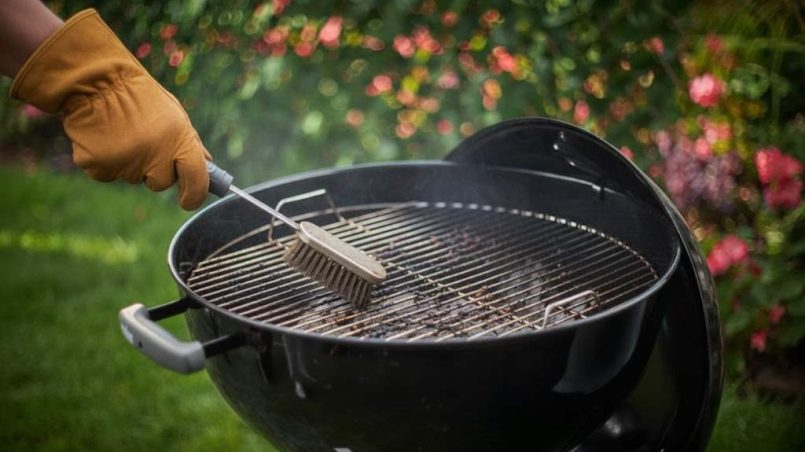
Start when the grill cools slightly but remains warm. Brush the cooking grate firmly. Loosen food bits and send them into the firebowl.
Next, use the One-Touch system. Sweep the blades. Push ash and debris into the catcher below. Empty the catcher into a metal bin. Never use paper or flammable trash.
Then, wipe the lid and bowl exterior. Use warm soapy water. Rinse and dry well. Moisture invites rust.
Moreover, check the vents. Brush away stuck ash. Open airflow matters for your next cook.
Finally, crumple aluminum foil. Scrub the grate lightly if needed. It shines without harsh chemicals.
These steps take five minutes. However, they save hours on deep cleans later.

Weekly Maintenance for Consistent Performance
Do a quick weekly check. It catches issues early.
Inspect the cooking grate. Brush thoroughly. Flip it and clean the underside too.
Empty and wipe the ash catcher. Even small amounts hold moisture.
Look at the legs and wheels. Tighten loose bolts. Clean dirt from wheels for easy moving.
Additionally, examine the dampers. Move them fully open and closed. Ensure smooth operation.
Wipe the lid interior. Scrape carbon buildup gently with a plastic scraper.
These habits keep your kettle ready. You avoid surprises mid-cook.
Deep Cleaning Your Weber Original Kettle: Step-by-Step
Perform a deep clean every few months or seasonally.
Cool the grill completely first. Safety always comes first.
Remove the cooking grate. Soak it in warm soapy water. Scrub with a brush later.
Take out the charcoal grate. Shake off loose ash.
Use the One-Touch system fully. Empty all remaining ash.
Next, mix mild soap and water. Scrub the bowl interior with a sponge or steel wool. Focus on greasy spots.
Rinse thoroughly. Dry with towels. Moisture left behind causes rust.
Clean the lid inside the same way. Reach corners carefully.
Moreover, wash the ash catcher. Dry it completely before reinstalling.
Oil the cooking grate lightly. Use high-heat oil. Wipe excess.
Reassemble everything. Your kettle looks and works like new.
Deep cleans take 30 to 60 minutes. Yet they add years to your grill’s life.
Preventing and Removing Rust on Your Kettle
Rust appears on many kettles. Prevent it proactively.
Always empty ash promptly. It traps humidity.
Store the grill covered. Use a quality Weber cover. However, keep it in a dry spot if possible.
After cleaning, dry all surfaces fully. Apply a thin oil layer inside the bowl occasionally.
If rust shows, act fast. Brush it off with steel wool. Wash the area. Dry well. Oil lightly to protect.
Porcelain enamel resists rust well. However, chips expose metal. Touch up with high-heat paint if needed.
Regular care keeps surface rust away. Your kettle stays beautiful.
Seasoning and Protecting the Cooking Grate
Weber’s plated or enameled grates need no heavy seasoning. The factory coating works great.
Still, many owners oil lightly after cleaning. It adds non-stick help.
Heat the grill to medium. Apply thin high-heat oil. Let it smoke slightly.
Moreover, cook fatty foods often. Natural seasoning builds over time.
Avoid heavy scraping. It damages the coating.
Clean grates last longer. Food releases easily.
Proper Storage and Off-Season Care
Store smart when not grilling often.
Clean deeply first. Remove all ash and grease.
Cover the grill always. Weber covers fit perfectly.
Place it under shelter if you can. Reduce weather exposure.
Disconnect accessories. Store indoors.
In winter, check monthly. Brush off snow gently.
Bring it out in spring. Do a quick burn-in. You start the season right.
Good storage prevents damage. Your kettle waits patiently.
Related:
Hosting a Garden Party at Home This Summer
Why Might a Restaurant Undercook Your Steak?
Troubleshooting Common Weber Kettle Issues
Face problems sometimes. Fix them easily.
Ash buildup blocks vents. Clean the One-Touch blades. Ensure free movement.
Uneven heat often means clogged dampers. Brush them clear.
Rust on grates? Brush and oil. Replace if severe.
Wheels stick? Clean and lubricate lightly.
Lid doesn’t seal well? Check for debris. Wipe the rim.
Most issues stem from skipped cleaning. Stay consistent. Problems stay rare.
Safety Tips During Maintenance
Prioritize safety every time.
Wear gloves. Protect from sharp edges and chemicals.
Work on cool grills only. Burns happen fast.
Dispose ash safely. Use metal containers. Douse with water if unsure.
Avoid harsh chemicals. They damage enamel.
Keep kids and pets away during cleaning.
Safe habits let you enjoy grilling worry-free.
Conclusion
You now hold the full playbook to maintain and clean your Weber Original Kettle 22-Inch Grill properly. Regular care brings safety, longevity, and perfect cooks every time.
Start small today. Brush after your next grill session. Build habits gradually.
Your kettle rewards you with decades of delicious meals. Fire it up confidently.
Grab your brush and get started now. Great barbecues await.
FAQs
How often should I clean my Weber Original Kettle grill?
Clean lightly after every use. Brush grates and empty ash. Deep clean every 3 to 6 months or seasonally.
Do I need to season a new Weber kettle?
Factory coating handles it. However, many do a high-heat burn with light oil for extra protection.
How do I remove stubborn rust from the bowl?
Brush with steel wool. Wash with soap. Dry fully. Apply thin oil. Act early for best results.
Can I use oven cleaner on my Weber grill?
Avoid it. Harsh chemicals damage porcelain enamel. Stick to mild soap and brushes.
Is it safe to leave ash in the grill?
No. Ash holds moisture and speeds rust. Empty after every cook.
Ref:
- Weber Official Cleaning Guide: https://www.weber.com/US/en/blog/tips-techniques/charcoal-grill-maintenance/weber-31174.html
- NFPA Grilling Safety Statistics: https://www.nfpa.org/education-and-research/home-fire-safety/grilling
- Weber Owner’s Manuals: https://www.weber.com/US/en/help/manuals
- Hearth, Patio & Barbecue Association Maintenance Study Reference